
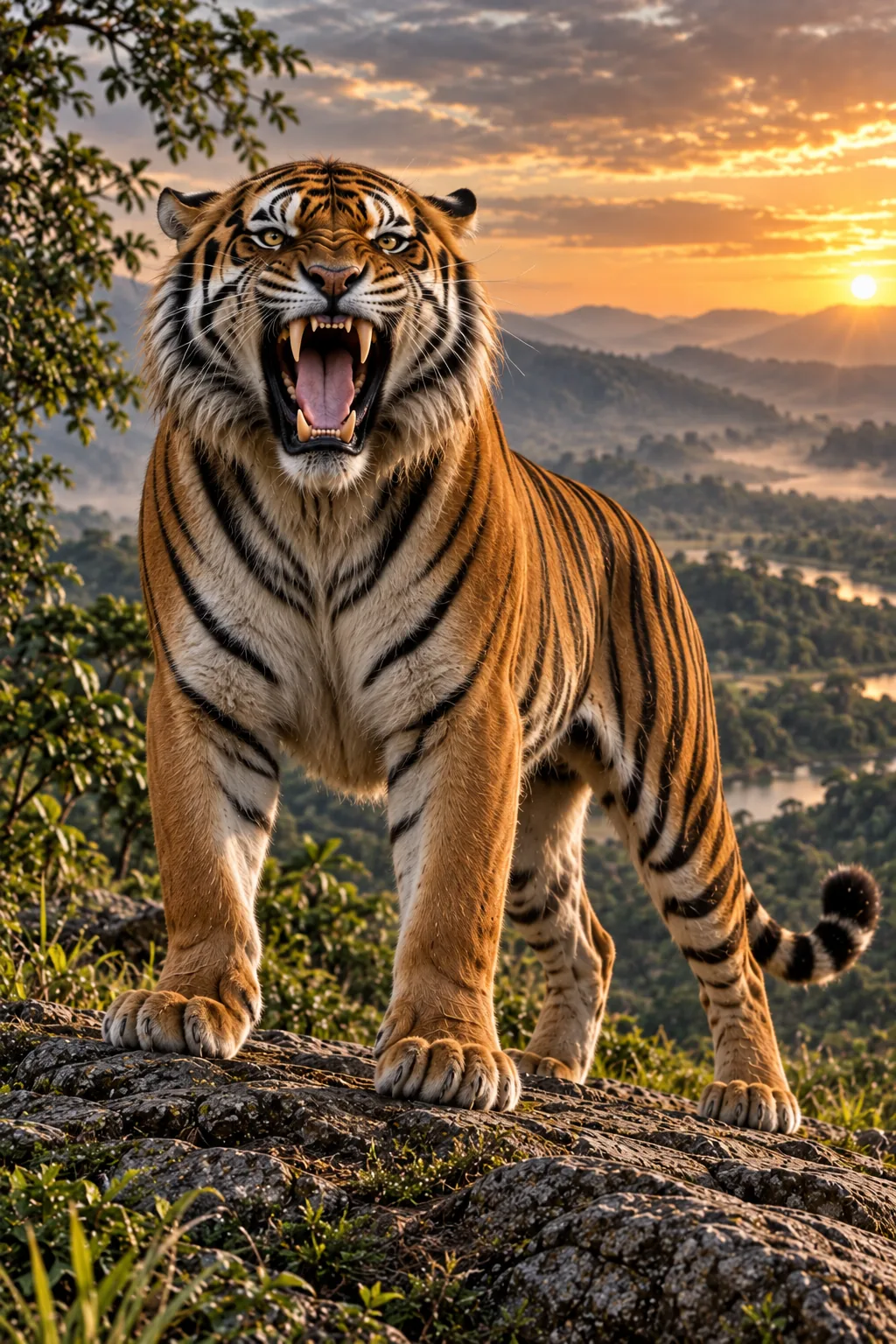
Bengal Tiger
Panthera tigris tigris
The iconic apex solitary predator of the Indian subcontinent.
Weight 180 –
Bite Force ~1050 PSI
Speed 65 km/h
The tiger is the world's largest cat — a solitary apex predator. Explore every tiger type, from the Bengal tiger of India to the Siberian tiger of the frozen taiga: size, weight, bite force, habitat, diet and behavior.
Panthera tigris tigris
The iconic apex solitary predator of the Indian subcontinent.
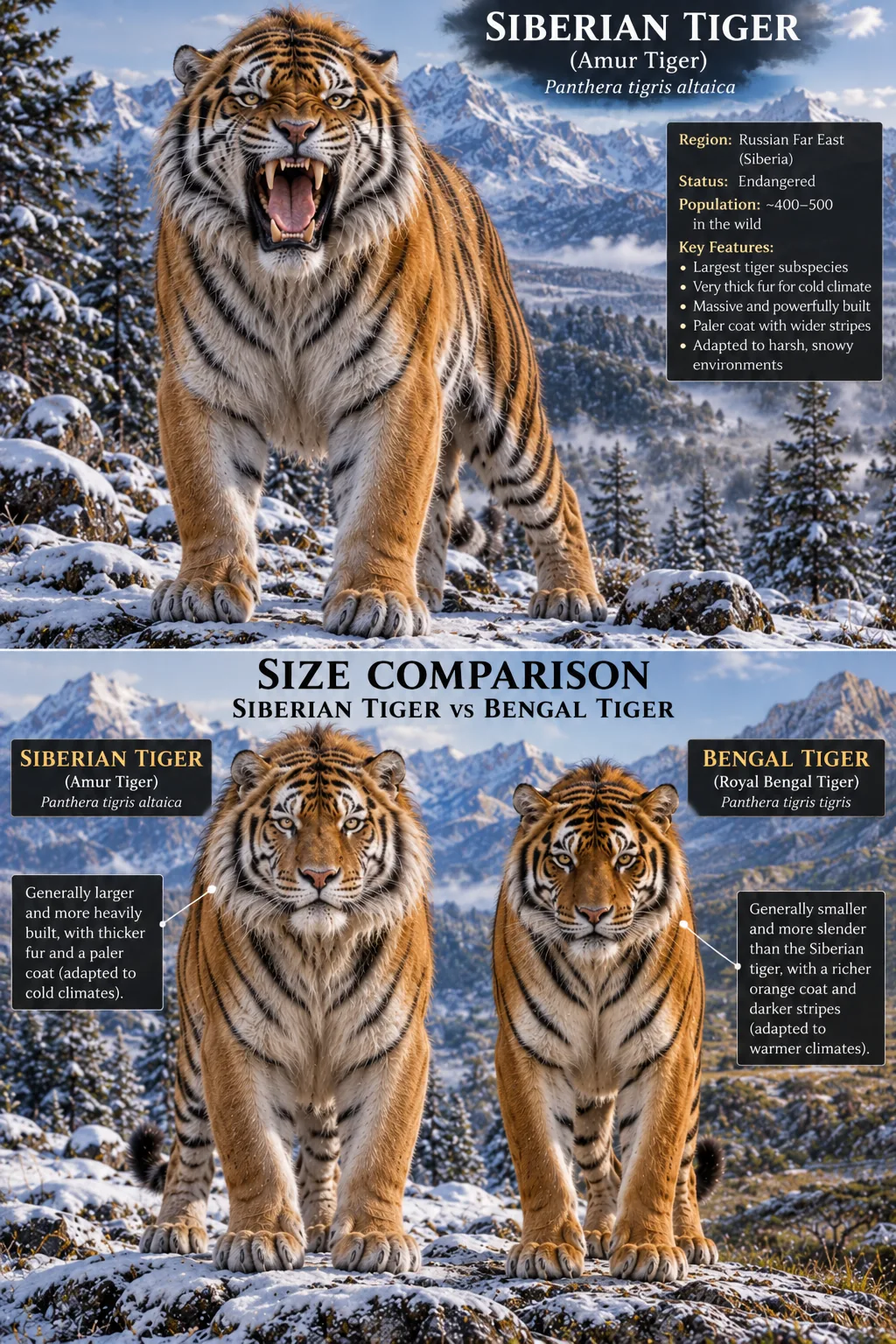
Panthera tigris altaica
The heavyweight titan of the frozen taiga forests.
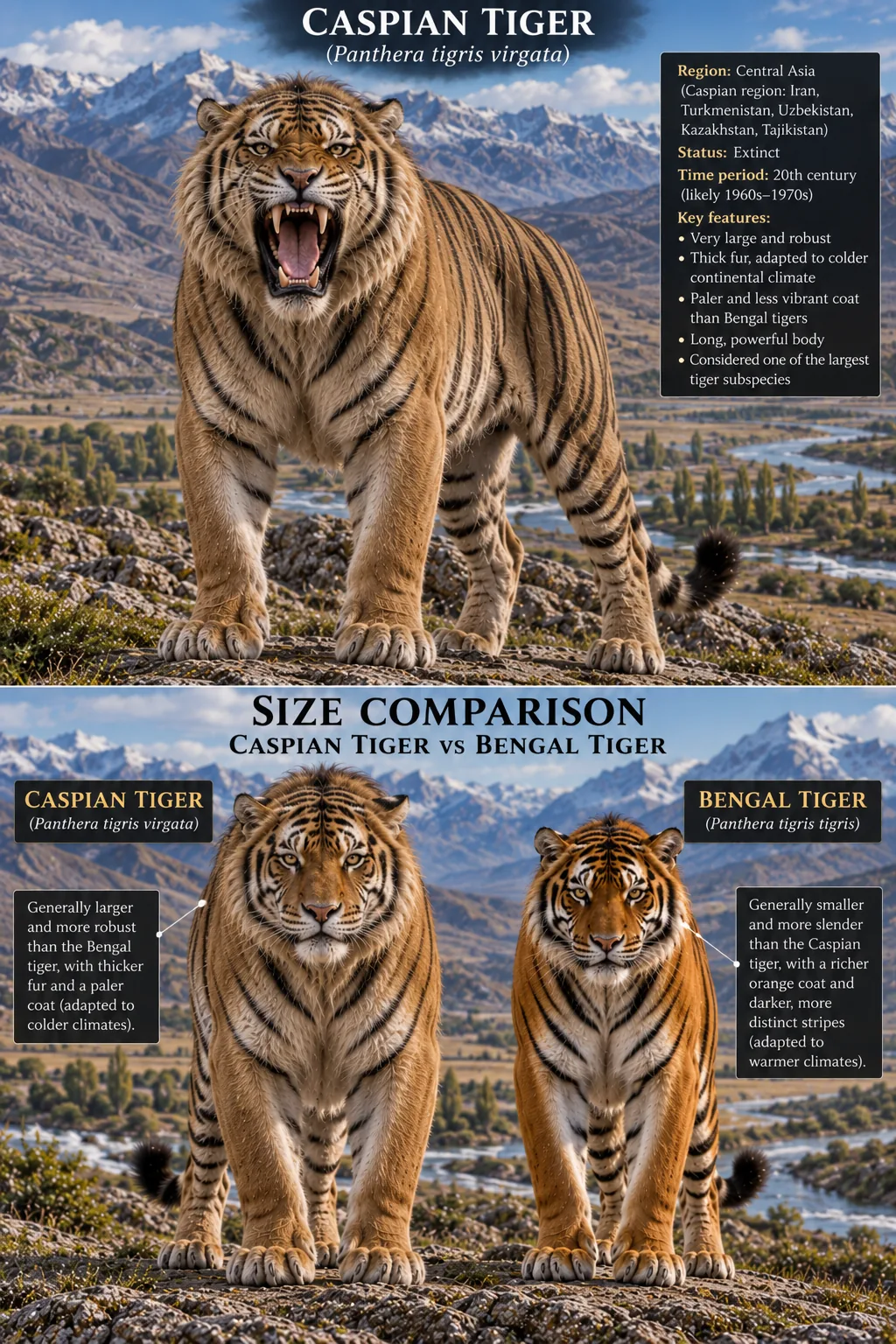
Panthera tigris virgata
The legendary river-valley predator of Central Asia and the Silk Road.
A tiger is a solitary hunter that patrols huge territories, swims strongly and hunts mainly at dusk and night. An adult male tiger weighs 180–318 kg with a bite force around 1,050 PSI and canines up to 9 cm. Each tiger's stripe pattern is unique, like a fingerprint. Female tigers raise 2–4 cubs alone for about two years. Wild tigers are endangered due to habitat loss and poaching — fewer than 6,000 remain.
A tiger (Panthera tigris) is the largest wild cat on Earth — a solitary, muscular apex predator known for its orange coat, black stripes, powerful forelimbs and ~1,050 PSI bite force. Tigers live in Asian forests, grasslands, mangroves and snowy taiga.
Male tigers weigh 180–318 kg (397–700 lbs) and reach 2.6–3.3 m including the tail. Siberian tigers are the largest tigers, Bengal tigers average 200–260 kg, and females are roughly 30–40% smaller than males.
Tigers live across Asia: Bengal tigers in India, Bangladesh, Nepal and Bhutan, Siberian tigers in the Russian Far East and northeast China. Habitats include tropical forests, tall grasslands, Sundarbans mangroves and snowy mountain taiga.
Tigers are solitary ambush carnivores eating deer, wild boar, gaur, water buffalo and red deer. A tiger stalks to 10–15 m, then delivers an explosive leap and cervical neck bite with 7.5–9.0 cm canines.
Living tiger types include the Bengal tiger, Siberian (Amur) tiger, plus Sumatran, Indochinese and Malayan tigers. The Caspian tiger is extinct (1970s) but genetically close to the Siberian tiger.
Launch our interactive comparison tool to analyze head-to-head bite force, mass, and skull mechanics.