
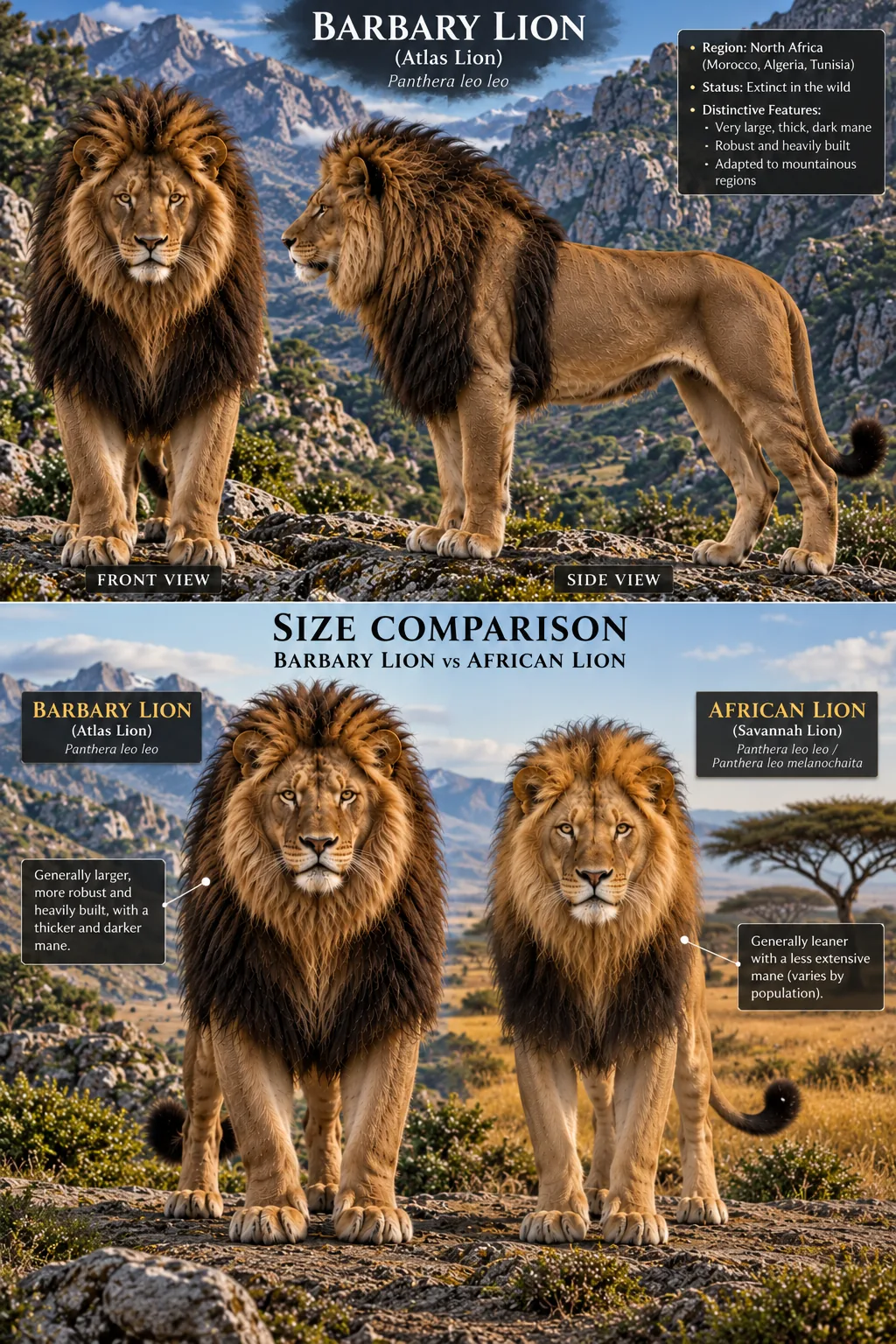
Barbary Lion
Panthera leo leo (North African population)
The colossal, dark-maned mountain lion of North Africa.
Weight 200 –
Bite Force ~800 PSI
Speed 58 km/h
The lion is the social king of cats — living in prides, roaring across savannas and defending territory in coalitions. Explore every lion type, from the African lion to the extinct Barbary lion: size, mane, habitat, diet and behavior.
Panthera leo leo (North African population)
The colossal, dark-maned mountain lion of North Africa.
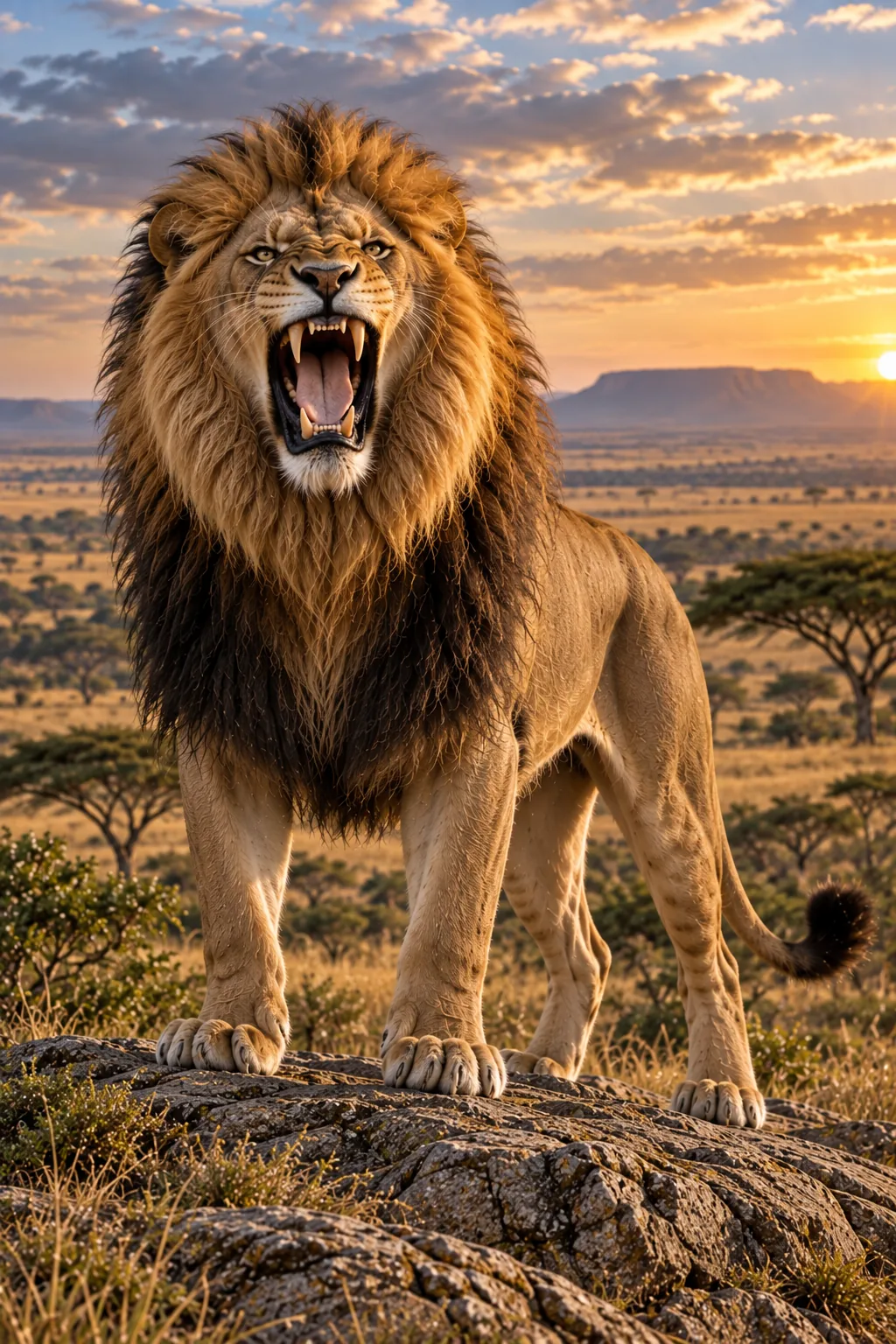
Panthera leo
The undisputed social monarch of the African savanna.

Panthera atrox
The ice-age giant that ruled North America beside mammoths and bison.
A lion lives in a pride led by females that hunt together, while male lions with dark manes defend territory. An adult male lion roars up to 8 km away to mark dominance. A lion's mane protects the throat in fights and signals age and strength. Wild lions are vulnerable — around 20,000–25,000 remain, threatened by habitat loss and human conflict.
A lion (Panthera leo) is the only truly social big cat, living in prides of up to 30. Male lions are known for their mane, roar audible up to 8 km, and pride defense, with a bite force around 650–700 PSI.
Male lions weigh 160–295 kg (350–650 lbs) and reach 2.4–3.2 m including the tail, standing up to 1.2 m at the shoulder. Barbary lions were the largest lions; African lions average 160–225 kg.
Lions live mainly in sub-Saharan African savannas, grasslands and open woodlands such as the Serengeti and Kruger. Historically lions ranged across North Africa, the Middle East and India; Asiatic lions survive in Gir Forest.
Lions are cooperative hunters eating wildebeest, zebra, buffalo and antelope. Lionesses encircle prey while males defend kills and bring down large game like Cape buffalo with a suffocation throat clamp.
Living lion types include the African lion and Asiatic lion. Historic types include the Barbary (Atlas) lion, extinct in the wild in the 1960s, and the American lion (Panthera atrox), extinct since the Ice Age.
Launch our interactive comparison tool to analyze head-to-head bite force, mass, and skull mechanics.