

Bengal Tiger
Panthera tigris tigris
Endangered
The iconic apex solitary predator of the Indian subcontinent.
DIFFERENT WORLDS.
SAME GREATNESS.
“Legends Live in Different Lands.”
NATURE’S GREATEST RIVALS
Two apex predators. Different worlds. Compare their strength, size, speed, and more.
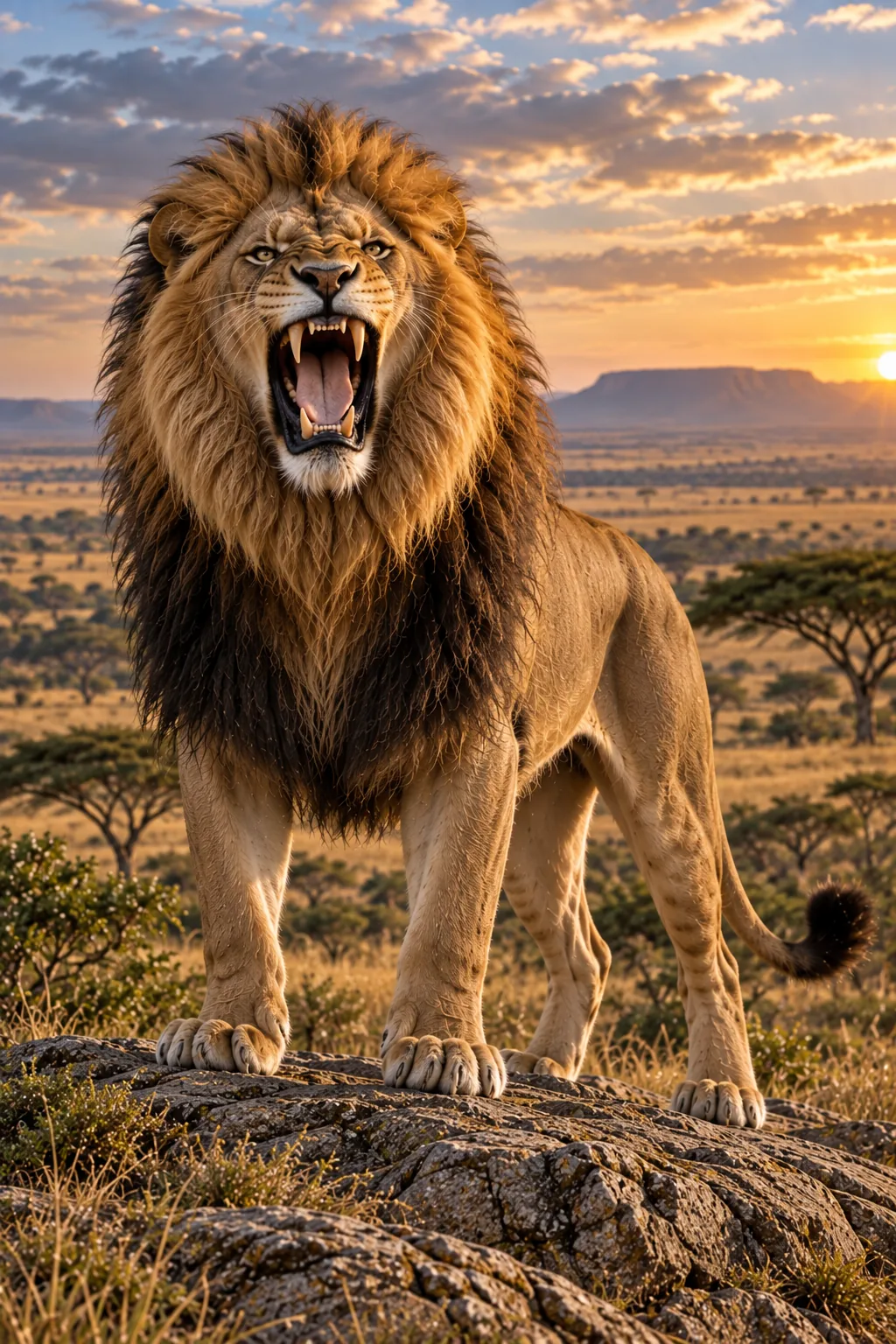
Tigers and lions have captivated human imagination for centuries. This website brings you closer to these incredible big cats — explore their types, discover their unique traits, and compare them like never before.
Panthera tigris tigris
The iconic apex solitary predator of the Indian subcontinent.

Panthera tigris altaica
The heavyweight titan of the frozen taiga forests.

Panthera tigris virgata
The legendary river-valley predator of Central Asia and the Silk Road.
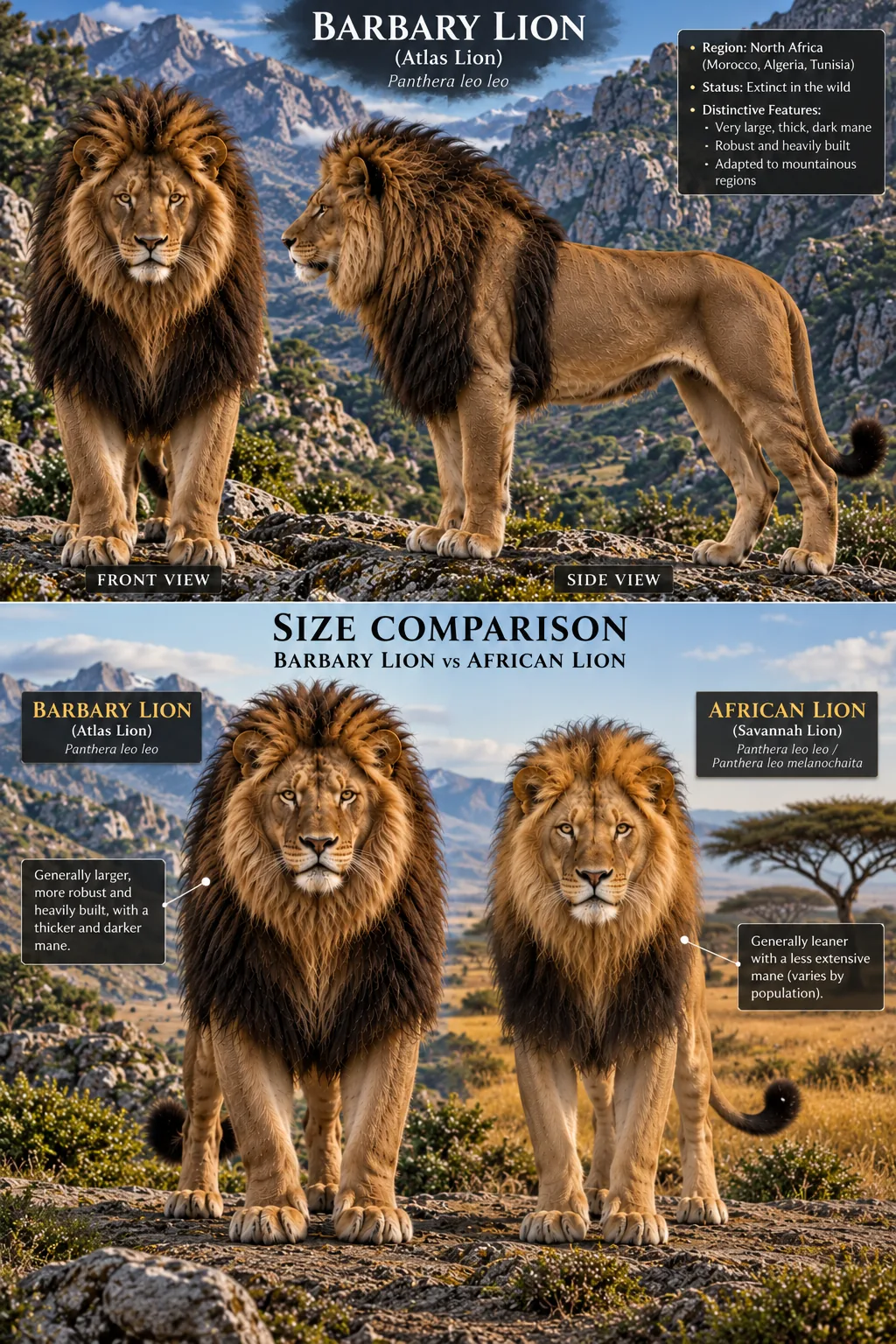
Panthera leo leo (North African population)
The colossal, dark-maned mountain lion of North Africa.
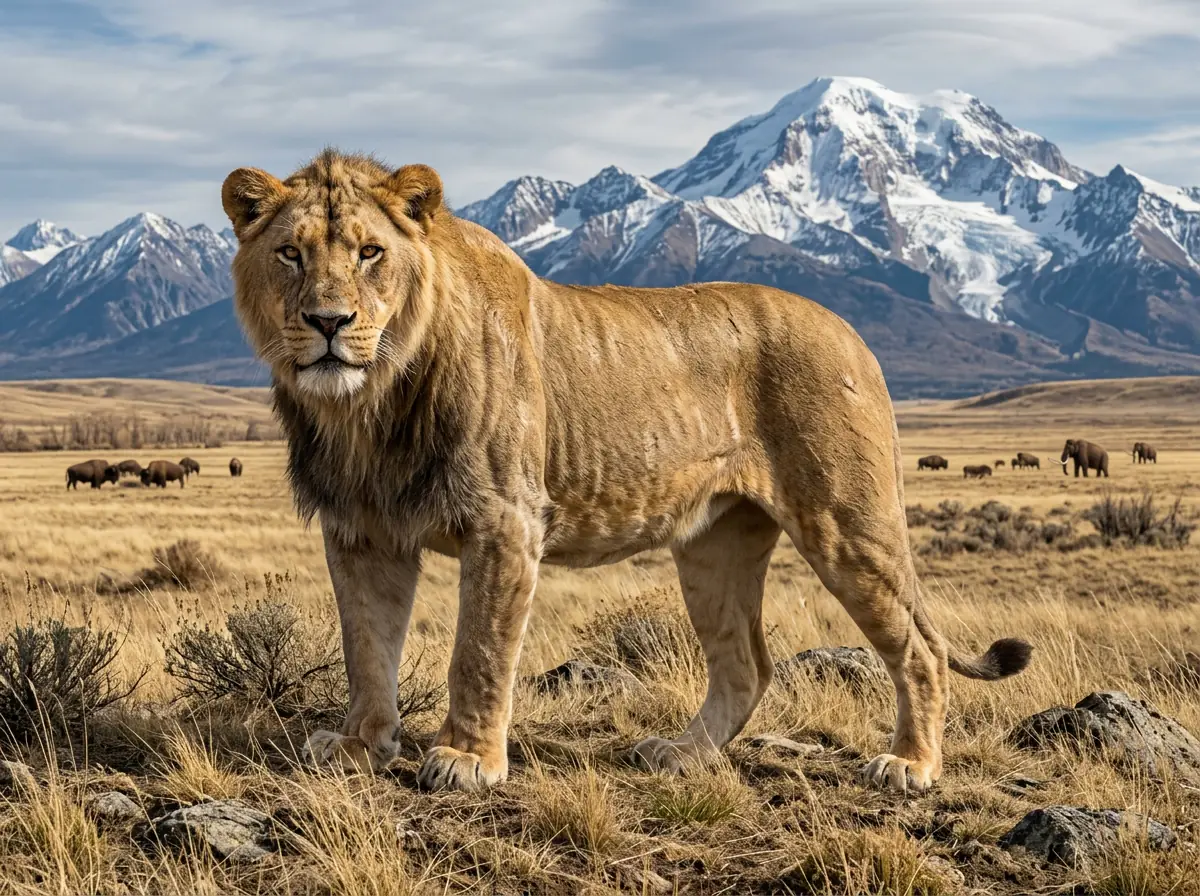
Panthera atrox
The ice-age giant that ruled North America beside mammoths and bison.
Explore our most requested scientific breakdowns and authenticated historical battle archives.
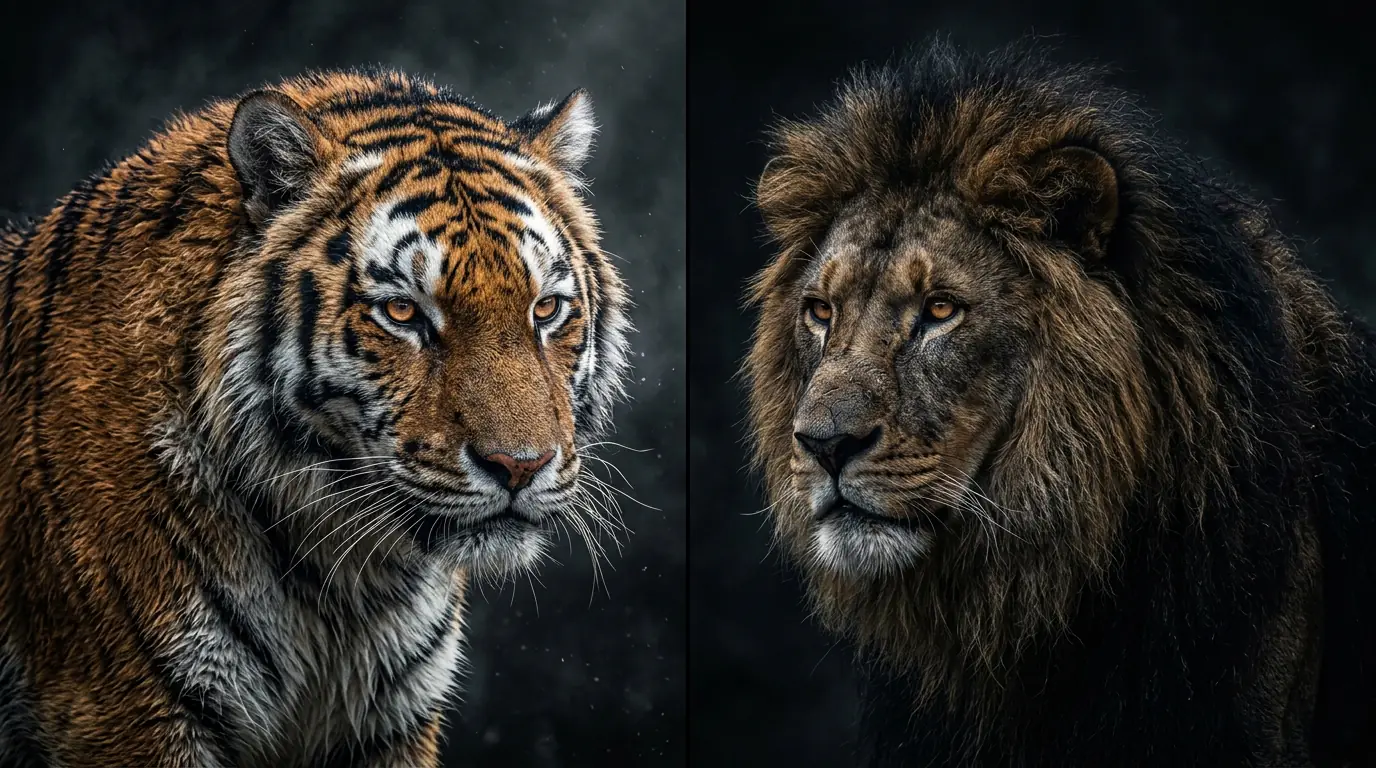 HEAVYWEIGHT CLASH
The 318 kg heavyweight king of the taiga versus the 225 kg savanna monarch. Compare bone density, paw swipe kinetic energy, and full fight likelihood.
Read Full Analysis HISTORICAL ARCHIVES
Ancient Roman Colosseum records, the famous 1899 Baroda pit fight in India, and modern zoo enclosure incidents documented by zoologists.
Explore Historical Records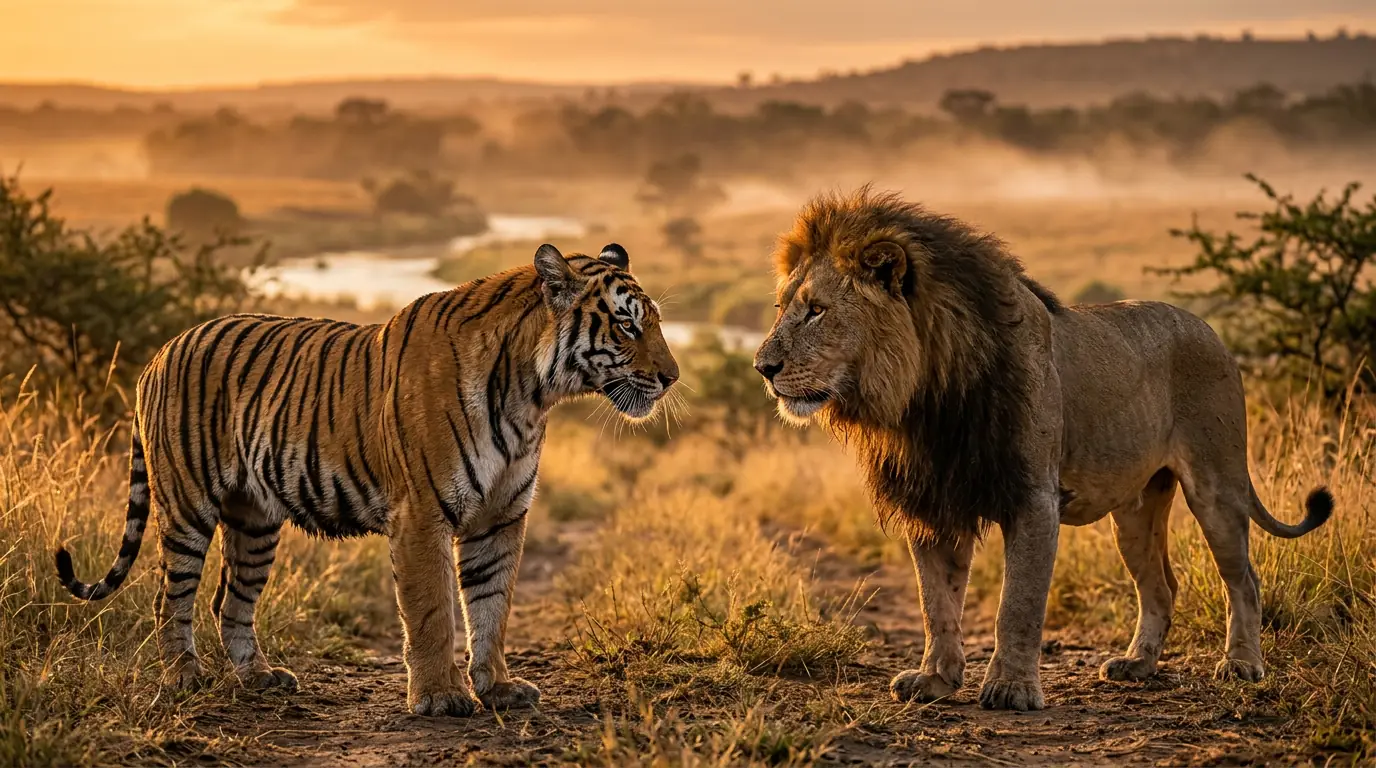
Select any tiger and lion type to compare their size, strength, speed, bite force, hunting style and much more.
Start Comparing An in-depth scientific breakdown of nature’s greatest apex predators, their biomechanics, and hypothetical head-to-head combat dynamics.
Welcome to the definitive digital encyclopedia dedicated to nature’s two most awe-inspiring big cats: the tiger (Panthera tigris) and the lion (Panthera leo). For thousands of years, across ancient Roman colosseums, Asian folklore, African oral traditions, and modern zoological studies, humanity has asked one timeless question: in a battle between tiger vs lion, who holds the ultimate crown? Our interactive wildlife tool and comprehensive scientific database bring hard biometrics, anatomical research, and evolutionary biology together to settle the age-old lion vs tiger debate once and for all.
Whether exploring the massive physical stature of a wild Siberian tiger, the predatory ferocity of an Indian Bengal tiger, the pride-hardened dominance of an African lion, or the storied legacy of the extinct Barbary lion, our platform serves as an accessible, research-informed reference for wildlife enthusiasts, students, and comparative zoology readers.
The perennial inquiry — tiger vs lion who would win — cannot be answered with simple folklore or arena myths. When analyzing a potential tiger vs lion fight, animal behaviorists, wildlife biologists, and biomechanical engineers evaluate five critical physical factors: muscular mass distribution, center of gravity, bone density, weaponry dimensions, and combat psychology.
In a hypothetical one-on-one tiger vs lion fight, the solitary tiger brings formidable physical advantages. Tigers evolve as lone hunters stalking dense forests, taiga woodlands, and tropical swamps. Because they do not hunt in prides, a tiger must single-handedly overpower massive, dangerous prey such as Indian gaur, wild boar, and water buffalo. To achieve this, a tiger possesses a significantly lower center of gravity, denser forelimb bones, and elongated rear limbs capable of balancing the cat upright while swiping with both front paws simultaneously. Furthermore, a mature male tiger delivers a bone-crushing bite force of approximately 1,050 PSI through 7.5 to 9.0 cm canine teeth, compared to 650 to 700 PSI for a mature African lion.
Conversely, the male lion is the quintessential gladiator among big cats. Unlike female lions who perform the majority of cooperative hunting, adult male lions spend their lives engaged in violent, territorial warfare against competing male coalitions. A male lion’s thick, bristling mane acts as natural physical armor, specifically evolved to absorb and deflect punishing bite strikes and claw sweeps aimed at the vulnerable jugular vein and cervical spine. While a tiger excels at explosive solo grappling, a lion’s extensive battle experience, aggression, and relentless stamina make any physical clash exceptionally fierce and unpredictable.
When evaluating tiger vs lion size, the tiger generally claims the title of the largest living feline species on Earth. However, dimensions and weights vary dramatically across different regional subspecies.
In a direct matchup between a siberian tiger vs lion, the Amur or Siberian tiger historically reigned as the undisputed heavyweight titan. Adult male Siberian tigers historically reached weights between 190 kg to over 300 kg (420 to 660+ lbs) and total lengths exceeding 3.3 meters (11 feet). By comparison, prime male African lions average 160 kg to 225 kg (350 to 500 lbs), though they stand slightly taller at the shoulder (up to 120 cm) due to their long-limbed savanna cursorial adaptations.
A clash between a bengal tiger vs lion presents an equally intense matchup. Bengal tigers are celebrated for their dense, powerhouse muscular frame and explosive predatory drive. Prime male Bengal tigers average 200 kg to 260 kg (440 to 570 lbs), routinely out-massing African lions while retaining extraordinary agility in jungle and riverine terrain.
Historical accounts also honor the legendary Barbary lion of North Africa. Inhabiting the Atlas Mountains, Barbary lions were renowned for their dark, magnificent manes extending over the abdomen and deep chest girth, making them historically one of the most formidable lion subspecies ever recorded.
Our interactive comparison engine lets you pit any tiger subspecies against any lion subspecies using transparent comparison parameters. By choosing specific cats from our digital encyclopedia, the tool turns published measurements and stated estimates into dynamic visual metrics:
Step into our comparison arena, test different matchups like Siberian tiger vs lion or bengal tiger vs lion, and discover the ultimate truths behind the world’s greatest big cats!
Scientific, veterinary, and biomechanical breakdown comparing bite force (PSI), paw swipe kinetic energy, canine length, and grappling leverage.
Tigers generate up to 1,050 PSI—enough to shatter water buffalo vertebrae in one clamp. Lions average 650–700 PSI, specialized for suffocating prey throat holds.
Inspect Bite Force Lab (1,050 vs 650 PSI)Bengal and Siberian tigers possess canines measuring 7.5 to 9.0 cm (up to 3.5 in), the longest of any living feline. Male lions average 6.5 to 7.6 cm (up to 3.0 in).
A tiger’s forelimbs are densely packed with heavy muscular fiber, capable of delivering a 10,000-lb kinetic blow (enough to shatter a cow’s skull). A lion’s swipe reaches ~8,500 lbs force.
Analyze 10,000-lb Strike Power & PhysicsSiberian tigers reach 300+ kg (660 lbs) and Bengal males average 220–260 kg (570 lbs). African lions max out around 225–250 kg (500–550 lbs).
Compare Body Weights & Skull SizesA male lion’s thick mane of dense, coarse hair acts as natural chainmail. It absorbs puncture strikes, shields vulnerable throat carotid arteries, and visually intimidates rivals in battle.
Tigers have strong rear leg musculature allowing them to stand upright on two legs and strike simultaneously with both front paws. Lions typically balance on 3 legs, swiping with only 1 paw.
Explore Standing Wrestling BiomechanicsIn an unprovoked, one-on-one duel on neutral ground between adult males in their physical prime: The Tiger holds a 65% to 75% probability of victory. The tiger’s superior physical mass (+20 to 50 kg), higher bone density, crushing 1,050 PSI bite force, and two-paw bipedal boxing stance outweigh the lion’s defensive mane advantage. However, in group warfare or coalition skirmishes, a male lion’s relentless combat stamina and pride loyalty make it an unyielding opponent.
Compare the acoustic physics behind nature's most terrifying vocalizations: low-frequency infrasound vs maximum open-savanna decibel volume.
Tigers emit deep, low-frequency sound waves as low as 18 Hertz. These infrasonic frequencies pass directly through thick jungle trees and dense undergrowth, vibrating the internal organs of prey and causing temporary acoustic paralysis.
A male lion’s roar is the loudest of any big cat, reaching up to 114 decibels (louder than a chainsaw). Evolved with square, flat vocal folds that withstand massive lung pressure, its call travels over 8 kilometers (5 miles) across flat plains.
Documented accounts from ancient Roman amphitheaters, 19th-century royal Indian menageries, and verified 20th-century zoological records.
Roman historians including Martial and Claudian documented imperial venationes (beast combats). In organized one-on-one combat staged by Emperors Titus and Domitian, Bengal and Caspian tigers consistently defeated Barbary and Asiatic lions. Chroniclers noted the tiger's rear-leg grappling agility and rapid two-paw claw strikes repeatedly bypassed the lion's mane defenses.
In 1899, the Maharaja of Baroda staged a widely documented clash inside an enclosed arena between an enormous male Barbary lion named Atlas and a wild Bengal tiger. Despite the lion's dense mane absorbing initial blows, the tiger's superior ~1,050 PSI bite force and low-center-of-gravity grappling eventually dragged the lion down, resulting in a decisive tiger victory.
In a verified contemporary zoological incident, an adult Bengal tiger slipped through a gap in its enclosure partition into an adjacent lion exhibit. With a single, devastating paw swipe delivered with an estimated 10,000 lbs of kinetic force, the tiger severed the African lion's jugular vein. The lion collapsed and died within minutes, demonstrating the terrifying lethal power of a tiger's forelimb blow.
One of the few verified instances of a lion victory occurred in Jamnagar, India, when a prime, highly aggressive 7-year-old Asiatic lion managed to defeat an 18-year-old aged Bengal tiger. The lion's relentless stamina and mane protection allowed it to withstand initial rushes until the older tiger succumbed to exhaustion, illustrating the crucial role of age, conditioning, and battle endurance.
Explore unedited chronicles from the Roman Colosseum, Titus' 100-day games, Maharaja Sayajirao's 37,000-rupee wager, and 20th-century zoological enclosure records.
Join 18,542 fans. One vote per day — come back tomorrow!
Your vote is stored on this device. Daily votes keep the leaderboard fresh.
1. Which cat generates the higher bite force (~1,050 PSI)?
2. Which cat defends territories in pride coalitions?
3. Which is the heaviest wild felid on Earth?
Score: 0 / 3 — tap an answer!
Prove it in the Fight Simulator →Loading today's fact…
Authoritative, scientifically grounded answers to the most searched questions about tigers, lions, and their historical combat records.
In a one-on-one fight between a lion and a tiger, scientific research and historical records give the edge to the tiger. Adult male tigers (especially Bengal and Siberian tigers) hold physical advantages in total body mass (+20 to 50 kg), muscle density, and bite force (~1,050 PSI vs ~650 PSI). While a male lion's mane provides crucial neck protection and lions possess exceptional aggression from defending prides, a tiger's lower center of gravity, agility, and ability to swipe with both front paws give it higher odds of victory.
Culturally and symbolically, the lion is regarded as the 'King of the Jungle' due to its regal mane, social pride leadership, and historic heraldry across ancient civilizations. Biologically and physically, however, the tiger reigns as the true feline king: it is the largest, heaviest, and strongest big cat on Earth, ruling its vast forest territories as a supreme solitary apex predator.
Biomechanical and veterinary studies show that a tiger has a significant statistical advantage in a hypothetical fight. Solitary tigers must overpower formidable prey like Indian gaur and wild water buffalo alone, developing superior rear-leg balance and grappling strength. A tiger can rear up and deliver rapid, two-paw claw strikes while maintaining balance, whereas a lion typically balances on three legs and strikes with one. Combined with a bite force over 1,000 PSI, the tiger has the upper hand in single combat.
Yes, a tiger can beat a lion. Documented accounts from ancient Roman amphitheaters, historical menageries in India, and zoological incidents show tigers frequently defeating lions in one-on-one combat. The tiger's heavier bone structure, longer canine teeth (up to 9 cm), and superior wrestling ability provide decisive physical advantages.
Historical lore from 19th-century India attributes this claim to legendary fighting tigers such as 'Gunga' or arena champions kept by maharajas (such as the Gaekwad of Baroda). While local circus and royal accounts sensationally claimed that exceptional captive tigers killed up to 30 lions in pit fights, modern wildlife historians view the exact number 30 as an embellished legend. Nonetheless, verified zoological records confirm that individual large male tigers have defeated and killed multiple lions in captivity.
Yes, lions have killed tigers in documented historical incidents. In captive environments and circus enclosures, male lions have emerged victorious, particularly when their thick manes deflected killing throat bites, or when a lion's relentless stamina outlasted an exhausted tiger. In 1951 at the Jamnagar Zoo in India, an Asiatic lion fatally wounded an 18-year-old Bengal tiger, and cooperative coalition attacks by multiple lions have also overwhelmed tigers.
Humans (Homo sapiens) are the tiger's greatest enemy through habitat destruction, poaching, deforestation, and prey depletion. In nature, adult tigers are apex predators with no natural hunters, though packs of dholes (Asiatic wild dogs) can occasionally contest territory or kills, and large saltwater or mugger crocodiles can clash with tigers in wetlands.
The title 'King of Beasts' was bestowed upon the lion due to its majestic mane resembling a royal crown, its fearless communal pride defense, its thunderous roar audible up to 5 miles away, and its prominence in Western and Middle Eastern cultural heraldry. Ancient Europeans and Mediterranean cultures had frequent exposure to lions (such as the Barbary and Asiatic lions), whereas the larger, stronger tiger lived in remote Asian jungles outside early Western historical consciousness.
Aside from humans, a lion's worst natural enemy is the spotted hyena (Crocuta crocuta). Lions and hyenas share the same ecological niche and engage in perpetual inter-species conflict over food and territory. Large hyena clans can harass, overwhelm, and kill isolated lions or vulnerable cubs. Additionally, rival male lions and nomadic coalitions represent a primary source of fatal conflict for adult male pride leaders.
Yes, a Bengal tiger can beat an African lion. An adult male Bengal tiger weighs an average of 200–260 kg (440–570 lbs) with a bite force of ~1,050 PSI, compared to an adult male African lion averaging 160–225 kg (350–500 lbs) with a bite force of ~650–700 PSI. The Bengal tiger's weight advantage, muscular forelimbs, and bone density make it favored in a one-on-one duel.
The tiger is the stronger cat both pound-for-pound and in absolute muscle mass. Tigers carry over 58% of body weight as muscle, with denser forelimb bones, a paw swipe estimated above 4,500 kg-m/s², and the ability to drag 550 kg kills solo. Lions counter with broad-chested collision mass and pride-fight stamina. See the full tiger vs lion strength breakdown for the bone-density and swipe-force data.
On average 20–50 kg heavier. Male Bengal tigers average 200–260 kg and Siberian tigers historically exceeded 300 kg, versus 160–225 kg for male African lions. The extinct American lion (up to 350 kg) is the one lion that could outweigh any tiger. See the tiger vs lion size charts for the full weight, length and shoulder-height comparison.
“A deeper understanding for a wilder tomorrow.”