
Barbary Lion vs African Lion: The Atlas Giant vs Savanna Monarch
The Barbary lion of North Africa's Atlas Mountains was historically regarded as the king of all lions. How did this extinct giant compare to the modern sub-Saharan African lion?
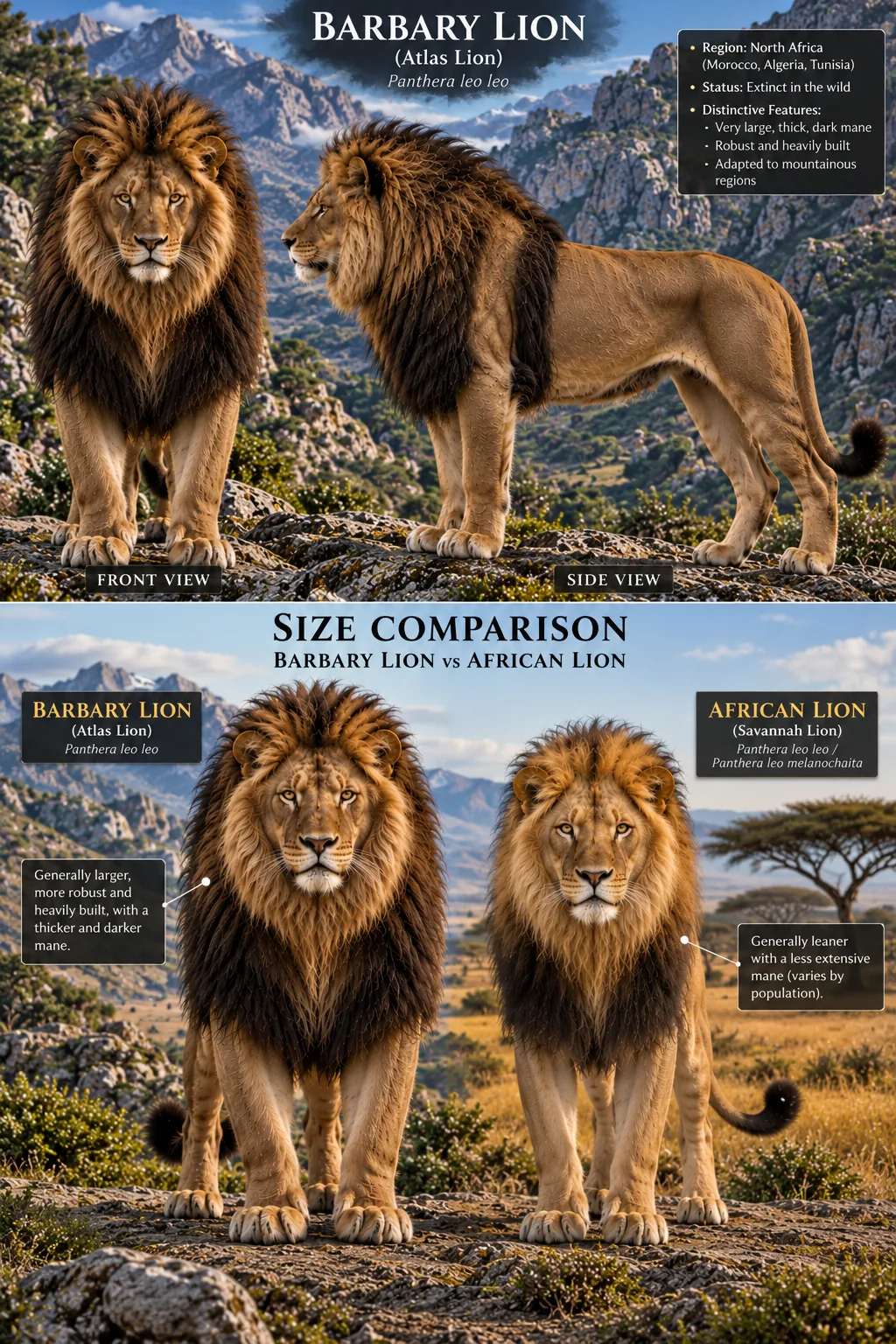
Barbary Lion
Panthera leo leo (North African population)
- Weight: 200 – 295 kg (440 – 650 lbs)
- Mane: Full belly & flank coverage
- Habitat: Atlas Mountain forests
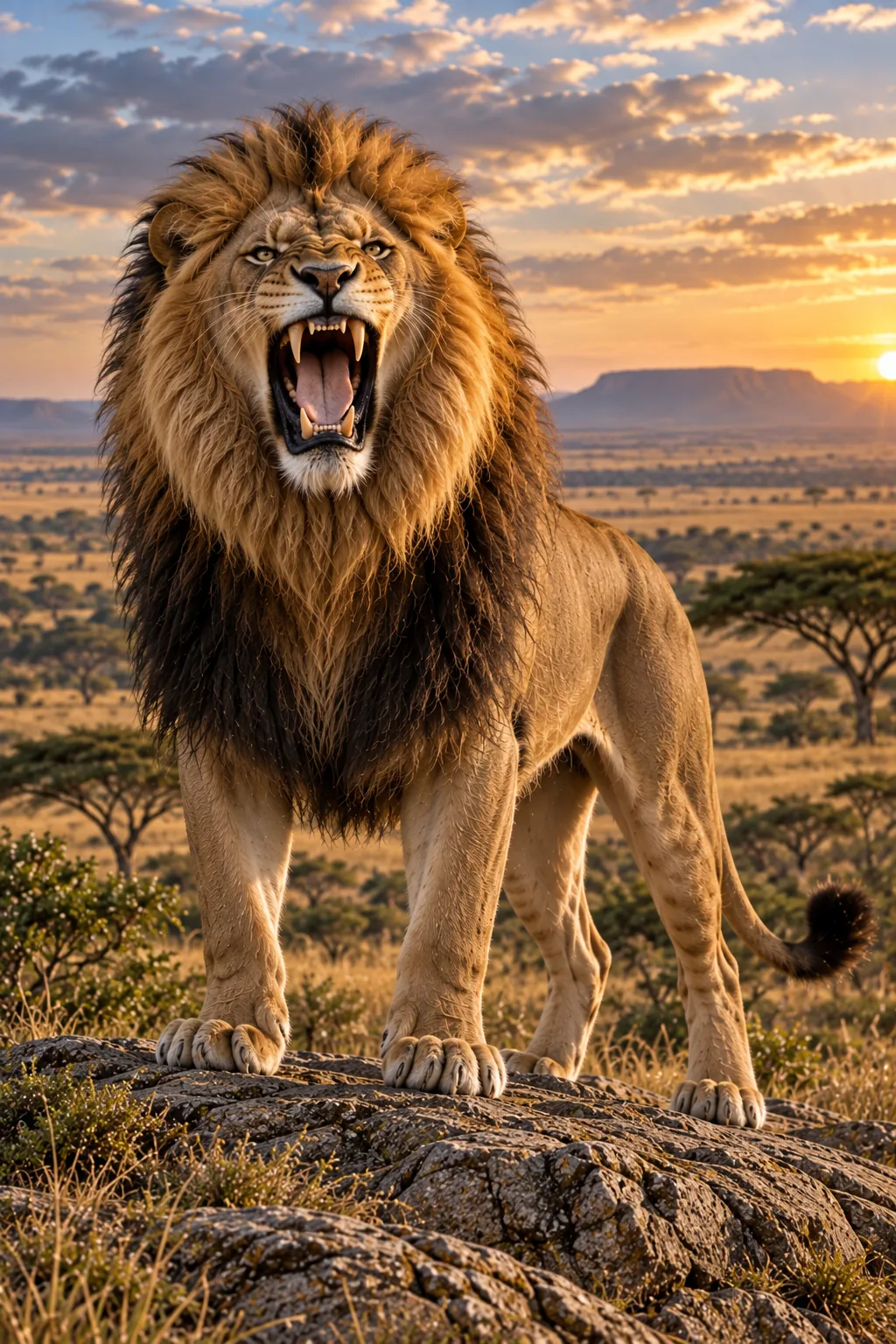
African Lion
Panthera leo
- Weight: 160 – 225 kg (350 – 500 lbs)
- Mane: Shoulder & chest mane
- Habitat: Savanna grasslands
| Trait | Barbary Lion (Atlas) | African Lion (Savanna) | Comparison |
|---|---|---|---|
| Average Male Mass | 200 – 295 kg | 160 – 225 kg | Barbary (+40–60 kg) |
| Mane Coverage | Extends along belly to groin | Confined to neck & shoulders | Barbary |
| Social Grouping | Solitary, pairs, small families | Large prides (up to 30) | Environmental adaptation |
| Current Status | Extinct in Wild (1960s) | Vulnerable (~20,000 left) | Conservation urgency |
Bergmann's Rule & Mountain Evolution
The Barbary lion's colossal stature is an evolutionary consequence of Bergmann's Rule, which states that geographic races of a species living in cooler climates tend to be larger than races in warmer climates.
In the snowy cedar forests of Morocco's Atlas Mountains, a massive body mass and a thick, dark mane extending across the abdomen conserved vital body heat. In the equatorial heat of the Serengeti and Maasai Mara, such an expansive mane would cause dangerous overheating, leading African lions to evolve sleeker, more heat-tolerant coats.
Frequently Asked Questions
Was the Barbary lion really bigger than modern African lions?
Yes. Historical skull records and museum specimens indicate adult male Barbary lions frequently reached 200–295 kg (440–650 lbs), compared to modern male African lions averaging 160–225 kg (350–500 lbs). The Barbary lion evolved in the cold, mountainous Atlas region, promoting larger body mass and an enormous belly mane.
Is the Barbary lion completely extinct?
The Barbary lion was declared extinct in the wild in the 1960s after excessive hunting in Morocco and Algeria. However, captive individuals in royal menageries (including the Moroccan royal collection) carry significant Barbary lion genetic heritage, and breeding programs are actively studying their lineage.